Light House Laser Engrave File: A Practical Evaluation for Makers
In the realm of digital crafting, selecting the right source material is often the most critical step in ensuring a professional final product. The Light House Laser Engrave File represents a specific category of digital assets designed to streamline the creation of high-quality laser-etched goods. This resource is not merely an image; it is a technical file optimized for the unique requirements of modern CO2 and diode laser machines. For hobbyists and small business owners alike, understanding the capabilities and limitations of this specific file type is essential for maximizing machine efficiency and output quality.
Understanding the Light House Laser Engrave File Format
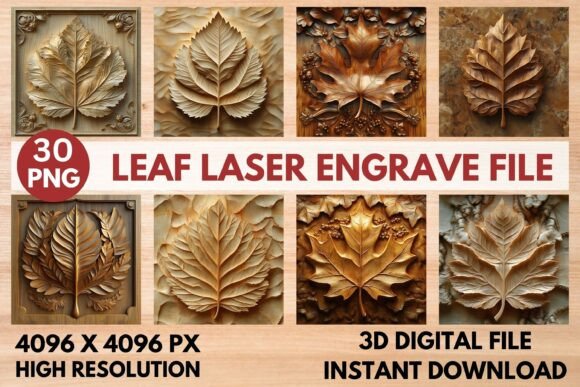
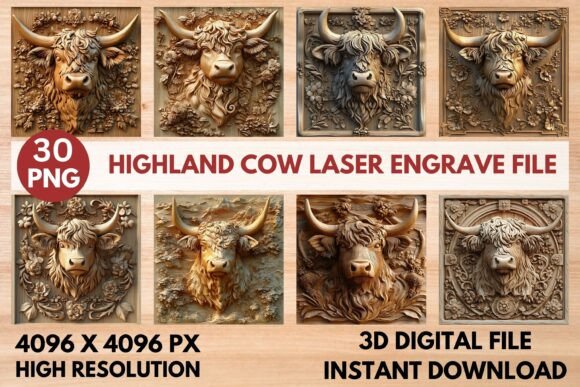
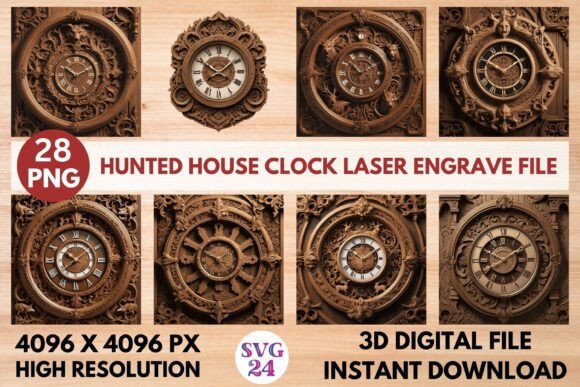
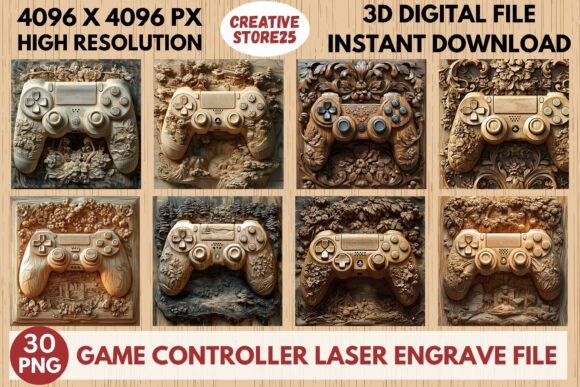
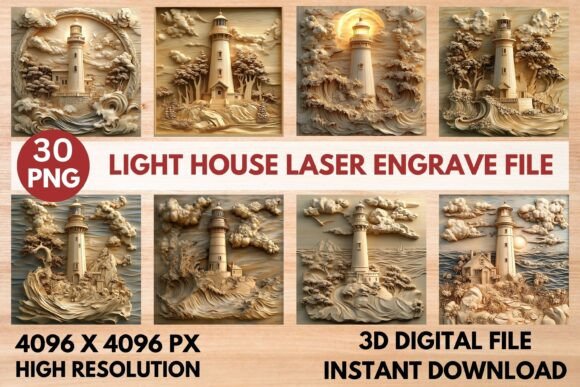
The core offering of the Light House Laser Engrave File – Premium PNG for Glowforge, LightBurn, xTool is a collection of high-resolution raster images. Unlike vector files (SVG), which define shapes using mathematical paths suitable for cutting or outlining, these files are pixel-based. They come in two primary variations: grayscale and coloring versions. Both are provided at a resolution of 4096x4096 pixels with transparent backgrounds.
The grayscale versions are specifically engineered for laser engraving. In laser software, the darkness of a pixel dictates the intensity of the laser beam. By utilizing a true grayscale spectrum, the file allows the machine to vary power or speed across the image, creating depth, shadow, and texture that mimic a photograph. The inclusion of 15 coloring PNGs offers versatility for those who wish to add manual color after engraving or use the design as a base for other creative processes. It is important to note that these are digital downloads only; no physical product is shipped.
Why Crafters Choose This Specific Design Resource
There are several compelling reasons why a maker might select the Light House Laser Engrave File over generic clip art found online. The primary driver is optimization. Generic images often lack the necessary contrast or resolution to translate well onto materials like wood, slate, or leather. When a low-resolution image is sent to a laser cutter, the result can be muddy, pixelated, or inconsistent.
This premium set addresses those issues directly. The files are crafted with laser engraving in mind, ensuring precise, sharp, and professional results. For users operating Glowforge, LightBurn, xTool, or Sculpfun machines, the files are pre-processed to align with standard dithering algorithms. For instance, the LightBurn instructions suggest applying a Jarvis dither filter, a technique that converts grayscale data into a pattern of dots that the human eye perceives as smooth gradients. This level of preparation saves the user significant time in post-processing and trial-and-error testing.
Benefits and Technical Advantages
The benefits of using a dedicated laser engrave file extend beyond simple aesthetics. The high resolution of 4096x4096 ensures that even when resized to fit larger products, such as tableware or large home décor pieces, the image retains its clarity. The transparent background eliminates the need for complex masking in software, allowing the laser to focus strictly on the design elements.
Furthermore, the package includes specific settings recommendations, which serve as a valuable starting point for new users. For example, the recommended Glowforge settings—Speed 1000, Power 90, Grayscale Vary Power, Max Quality 5, LPI 270, 1 Pass, No Masking—provide a reliable baseline. While every machine and material combination varies slightly, having manufacturer-tested parameters reduces the risk of burning through light wood or failing to register on darker surfaces.
- Material Versatility: The design guarantees smooth engraving results on a wide range of substrates, including wood, slate, acrylic, leather, and textiles.
- Workflow Efficiency: Ready-to-print status means less time spent editing and more time producing.
- Professional Finish: The grayscale optimization creates a depth that flat vector fills cannot achieve.
Tradeoffs and Considerations
While the Light House Laser Engrave File offers significant advantages, potential buyers must weigh certain tradeoffs. The most notable limitation is the format itself. Since these are PNGs and not layered SVG cut files, they are not suitable for cutting operations. If your project requires the laser to cut out the shape of the lighthouse from a sheet of material, this file will not function for that purpose. It is strictly for surface engraving.
Additionally, the files are not editable in the traditional sense. You cannot change the angle of the lighthouse, remove a cloud, or alter the structure of the building within the image. You can resize the file to fit your product, but you cannot modify the content. For creators who require customizations or vector manipulation, this rigidity may be a drawback. Users must also be aware that while the settings provided are excellent guides, they are not universal laws. Different brands of wood have varying densities, and different laser tubes have different power outputs. Adjustments to speed and power will likely still be necessary during the test phase.
Ideal Use Cases and Situational Fit
This resource is a strong fit for situations where photorealism or tonal variation is desired. Projects such as personalized stationery, framed wall art, coasters, and fashion prints benefit immensely from the grayscale capabilities. The intricate details of the lighthouse design translate beautifully into the grain of wood or the surface of slate, adding a tactile element to the final piece.
It is particularly well-suited for entrepreneurs looking to expand their product lines quickly. Because the files are optimized for multiple machines (Glowforge, LightBurn, xTool), a seller can produce consistent inventory regardless of the specific hardware they own. The ability to print on packaging and textiles further expands the commercial potential, making it a versatile asset for a diverse craft business.
When to Consider Alternatives
Despite its strengths, the Light House Laser Engrave File may not be the right choice for every project. If your goal is to create a silhouette cutout, a layered papercraft, or a design that requires text integration within the graphic, a vector-based SVG file would be superior. Vector files allow for infinite scalability without loss of quality and enable the laser to cut along defined paths rather than just etching a surface.
Furthermore, if you require full control over the design elements—for example, changing the color of the lighthouse roof or removing the moon from the sky—a PNG is insufficient. In these scenarios, purchasing a layered vector file or commissioning a custom design would be more appropriate. Additionally, for very small items where fine detail might get lost due to the physical limitations of the laser spot size, a simpler line-art version of the design might yield better results than a complex grayscale image.
Making the Right Decision
Determining whether the Light House Laser Engrave File aligns with your goals requires a clear understanding of your project's end state. Ask yourself: Do I need to engrave a detailed image with shadows and depth, or do I need to cut a shape? Am I willing to work with a fixed design, or do I need to edit the elements?
If your answer leans toward high-detail engraving on natural materials like wood or leather, and you value a streamlined workflow with pre-optimized settings, this file is an excellent investment. It bridges the gap between a raw concept and a market-ready product. However, if your workflow relies heavily on vector cutting or extensive customization, exploring alternative file formats will ensure you meet your production needs effectively. By evaluating your specific hardware, material choices, and design requirements, you can make an informed decision that enhances both your creative process and your final output.