Hunted House Clock Laser Engrave File Evaluation
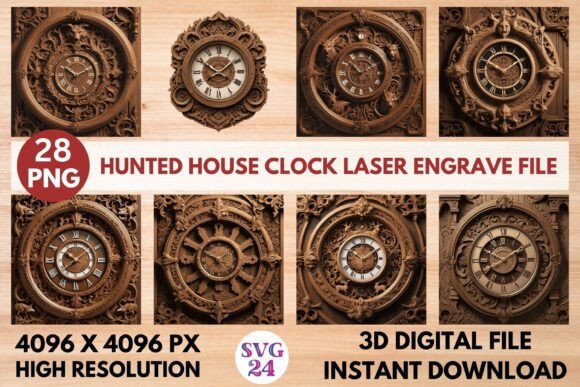
For makers and crafters looking to expand their Halloween or gothic home decor collections, the Hunted House Clock Laser Engrave File represents a specific category of digital asset designed for precision manufacturing. This file format is not a physical product but a high-resolution digital image intended for use with CO₂ laser engraving systems. Understanding the technical specifications, material compatibility, and workflow requirements of this file type is essential before integrating it into a production plan. This evaluation explores the utility, limitations, and practical applications of this design resource.
Understanding the File Format and Specifications
The core of this product is a set of PNG (Portable Network Graphics) files optimized specifically for grayscale rendering. Unlike vector formats such as SVG, which define shapes through mathematical paths suitable for cutting, PNG files are raster images composed of pixels. The Hunted House Clock Laser Engrave File comes in a resolution of 4096x4096 pixels, providing the density required for detailed shading without pixelation at standard engraving scales.
The inclusion of both grayscale and coloring versions offers distinct advantages. The grayscale versions utilize varying shades of black and white to simulate depth and texture when the laser burns into the material. Lighter areas receive less power, while darker areas receive more, creating a tonal effect. The coloring versions serve as visual references for post-engraving painting projects or for users who wish to apply colored overlays. It is critical to note that these files are non-editable; they are final assets meant for direct import into laser software rather than source files for modification.
Primary Use Cases and Applications
Crafters typically seek this specific file for three main purposes: functional clock faces, standalone wall art, and seasonal gift items. The design features a haunted house motif, making it particularly relevant for October sales cycles or permanent gothic-themed interiors.
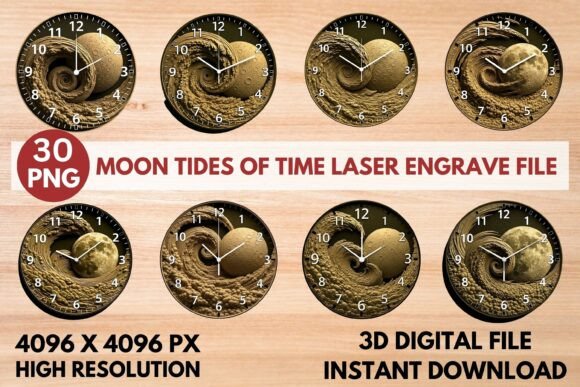
- Functional Clocks: The circular nature of many clock designs allows the haunted house imagery to be centered effectively. Users can engrave the face onto wood rounds, acrylic discs, or metal plates, then install standard quartz clock mechanisms.
- Wall Art: For those not interested in timekeeping functions, the design works well as a framed piece. The high contrast of the laser burn against light-colored wood creates a striking visual statement.
- Seasonal Decor: Because the aesthetic is tied to spooky themes, this file is ideal for limited-run production during the autumn season. It allows small businesses to offer unique, custom-made items that differ from mass-produced plastic decorations.
Technical Considerations and Machine Compatibility
Successful execution of the Hunted House Clock Laser Engrave File depends heavily on the hardware and software used. The file is compatible with major CO₂ laser platforms including Glowforge, xTool, Sculpfun, and systems running LightBurn software. However, achieving professional results requires adherence to specific settings.
When using LightBurn, the Jarvis dither filter is recommended to convert the grayscale data into a pattern the laser can interpret accurately. For Glowforge users, the optimal settings involve a speed of 1000 mm/min, a power of 90%, and a line spacing (LPI) of 270. These parameters ensure that the intricate details of the haunted house architecture remain visible without burning through the material. It is important to vary the power settings based on the specific material being used, as different woods absorb energy differently.
A significant tradeoff involves material selection. The instructions specify that light-colored wood works best. Dark woods or materials with heavy grain patterns may obscure the fine details of the engraving, resulting in a muddy appearance. Acrylic is another viable option, offering a cleaner look, though it produces a different aesthetic than the organic texture of wood.
Evaluating the Grayscale vs. Vector Approach
One of the most important decisions a maker must make is whether a PNG file fits their project goals better than an SVG file. The Hunted House Clock Laser Engrave File is strictly for engraving, not cutting. If the goal is to cut out the shape of the haunted house from a sheet of wood, this file will not work. SVG files are required for cutting operations because they provide clean, continuous lines that the laser head can follow to slice through material.
If the project requires a combination of cutting the outer shape and engraving the internal details, the user would need to purchase a separate vector file or create a hybrid workflow. Relying solely on this PNG file limits the project to surface-level decoration. Therefore, buyers should assess whether they have the necessary backing material pre-cut or if they intend to mount the engraved piece onto a larger substrate.
Cost-Benefit Analysis for Makers
From a business perspective, the value of this digital download lies in its versatility and the lack of recurring costs. Once purchased, the ZIP file containing the 14 grayscale and 14 coloring variations can be used indefinitely. This makes it a cost-effective solution for scaling production compared to purchasing physical stencils or molds.
However, there are hidden costs in terms of time and experimentation. Because the file is not editable, users cannot adjust the size or aspect ratio significantly without risking quality loss. Furthermore, testing the settings on scrap material is mandatory to avoid wasting expensive stock like plywood or acrylic. The learning curve associated with dialing in the correct power and speed for a specific machine model can add hours to the initial setup process.
Situational Fit and Alternatives
This file is a strong fit for hobbyists and small business owners who already own a CO₂ laser and have experience with raster engraving. It is particularly suitable for those looking to enter the niche market of spooky or gothic home decor without investing in custom design software skills.
Conversely, alternatives may be worth considering in several scenarios:
- Lack of Equipment: If the reader does not own a laser cutter, this file has no utility. In this case, exploring Cricut-compatible vinyl designs or printable paper templates would be more appropriate.
- Need for Customization: If the user wants to change the text on the clock or alter the architectural details of the house, a static PNG is insufficient. A vector-based design created in Adobe Illustrator or CorelDraw would allow for full customization.
- Cutting Requirements: As mentioned, if the project involves cutting the silhouette of the house, a dedicated SVG cut file is necessary. Using a PNG for cutting attempts will result in errors or poor-quality edges.
Conclusion
The Hunted House Clock Laser Engrave File serves as a specialized tool for creators equipped with CO₂ laser technology. Its high-resolution grayscale format delivers professional-grade detail suitable for wood and acrylic surfaces, making it an excellent choice for seasonal decor and personalized gifts. However, its effectiveness is contingent upon the user's ability to manage raster settings and select appropriate materials. By understanding the distinction between engraving and cutting, and by recognizing the limitations of non-editable PNG files, makers can determine if this asset aligns with their specific production capabilities and creative objectives. For those with the right equipment and workflow, it offers a reliable method for producing high-quality, hauntingly beautiful decor.