4th of July Patriotic Butterfly LaserCut
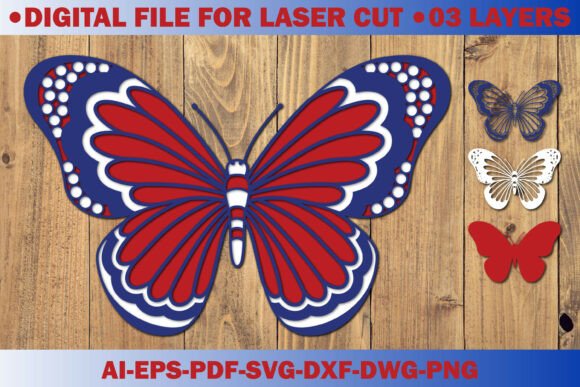
Celebrating Independence Day often involves more than just fireworks and barbecues; for many creators, it is an opportunity to craft tangible symbols of patriotism. The 4th of July Patriotic Butterfly LaserCut design offers a unique intersection of organic form and national pride. Unlike standard stars or stripes, this 3D layered layout uses the delicate wings of a butterfly to frame red, white, and blue motifs. This digital multilayer file set is engineered specifically for precision cutting machines, allowing users to transform flat vector data into dimensional art pieces that capture the spirit of the holiday with depth and elegance.
Understanding the Design and File Structure
At its core, this project is a digital blueprint designed for versatility. The graphic originates as a high-resolution image measuring 1500 x 1500 pixels, but because it is built on vector principles, it is scalable infinitely without losing clarity. Whether you are cutting a small ornament or a large wall hanging, the lines remain crisp. The package arrives in a ZIP folder containing a comprehensive suite of formats: AI, EPS, SVG, DXF, DWG, PNG, and PDF. This variety ensures compatibility with almost any software workflow, from Adobe Illustrator to CorelDRAW, and hardware ranging from desktop laser engravers to industrial CNC routers.
The "3D Layered" aspect is what distinguishes this design from a simple silhouette. It consists of multiple nested layers that stack to create shadow and dimension. When cut from materials like wood, acrylic, or cardstock, these layers assemble into a piece where the butterfly appears to hover above the background, creating a visual effect that changes as the viewer moves around it. This complexity requires careful planning during the cutting process but rewards the maker with a professional-grade finish.
Why Different Audiences Value This Design
The appeal of the 4th of July Patriotic Butterfly LaserCut extends across various skill levels and professions, though the reasons for interest differ significantly. For some, it is a creative outlet; for others, it is a commercial asset or an educational tool. Understanding how this resource fits into different workflows helps users determine if it aligns with their specific goals.
For Hobbyists and Beginners
Beginners entering the world of laser cutting often struggle with finding designs that balance simplicity with visual impact. A solid shape is easy to cut but lacks character, while overly complex files can lead to frustration and material waste. This butterfly design serves as an excellent middle ground. The layered structure introduces the concept of nesting and assembly without requiring advanced engineering skills.
A hobbyist might use this file to practice setting kerf values—the width of material removed by the laser blade—on different thicknesses of balsa wood or MDF. Because the design includes distinct layers, they can experiment with color blocking using pre-colored paper or stained wood. The learning value here is substantial; users gain experience in managing multi-part assemblies and understanding how layer order affects the final aesthetic. For those looking to decorate their own homes, this project offers a cost-effective way to produce custom decor that feels handmade rather than mass-produced.
For Small Business Owners and Entrepreneurs
Entrepreneurs running Etsy shops or local craft businesses view this design through the lens of commercial viability and production efficiency. The primary priority for this group is often speed and reliability. They need files that cut cleanly the first time to minimize labor costs and material scrap. The inclusion of DXF and SVG formats is crucial here, as these are the industry standards for most consumer and prosumer laser machines.
A business owner might evaluate this file based on its potential for customization. Can the butterfly be resized for keychains? Can the colors be swapped for corporate branding alongside the patriotic theme? The infinite scalability allows for a diverse product line, from small gift tags to large signage. Furthermore, the 3D nature of the design adds perceived value, allowing sellers to command higher price points compared to flat decals. For marketers, the visual uniqueness of a butterfly motif stands out in a sea of traditional flag designs, offering a fresh angle for seasonal promotions.
For Educators and Workshop Leaders
In educational settings, this design becomes a tool for teaching geometry, history, and technical skills simultaneously. Educators can use the file to demonstrate how vectors work, explaining why the image does not pixelate when enlarged. The patriotic theme provides a contextual hook for lessons about American history, while the butterfly motif can introduce concepts of symmetry and biology.
Workshop leaders might prioritize the ease of use for students. Since the file comes in multiple formats, instructors can choose the one that best matches their classroom's software. The clear separation of layers makes it ideal for group projects where students can each handle a different part of the assembly. The focus here shifts from profit to engagement and skill acquisition, making the design a practical asset for STEM programs or summer camps focused on creativity and technology.
For Professionals and Marketers
Professional designers and agency marketers may utilize this file as a base for larger campaigns. While they might not sell the cut piece directly, they could adapt the vector paths for print advertisements, website graphics, or event signage. The availability of AI and EPS files ensures that the artwork can be integrated seamlessly into professional design suites.
For a marketer, the flexibility of the file is paramount. They might strip away the 3D elements to create a flat logo variant or exaggerate the layers for a dramatic billboard effect. The high-quality resolution guarantees that the design looks sharp in both digital and physical media. Reliability and brand consistency are key; knowing that the source file is clean and well-organized saves hours of cleanup time, allowing professionals to focus on strategy and execution rather than troubleshooting corrupted vector paths.
Evaluating Fit for Your Project
Deciding whether the 4th of July Patriotic Butterfly LaserCut is right for your needs depends on several factors. If your goal is rapid prototyping or simple single-layer cutting, this design might be more complex than necessary. However, if you are seeking to add depth, texture, and a sense of craftsmanship to your output, the multilayer approach is highly effective.
Consider your available materials. This design shines when used with contrasting colors or textures, such as dark walnut paired with light maple, or red and white acrylic over a blue backing. If you only have access to a single color of material, the visual impact will be reduced, though still present due to the shadows created by the layers. Additionally, assess your machine's capabilities. Older or lower-power lasers may struggle with the fine details of the butterfly wings, requiring adjustments to power and speed settings to prevent burning.
Ultimately, this digital layout is more than just a pattern; it is a flexible resource that adapts to the user's intent. Whether you are a parent making a decoration for the porch, a teacher guiding a class through their first cut, or a shop owner stocking up for the holiday rush, the design offers a structured yet creative path forward. By providing robust file formats and a visually compelling concept, it bridges the gap between digital design and physical creation, empowering makers to bring their vision to life with precision and pride.